Proper functioning of the nose and nasal sinuses is crucial for comfortable daily living. Anyone who has ever had to deal with extended nasal congestion, nasal discharge, sinus pain and recurrent sinus infections can attest to this fact. Because disease in the nose and nasal sinuses can be caused by many different factors, and because there are so many treatment options available, it is important to have a basic understanding of the anatomy and how different components of the nose and nasal sinuses interact with each other. A basic understanding of the anatomy and physiology of the nose and sinus organs will help you navigate your therapy whether you chose to be conservative with holistic or over the counter medications, or when deciding on more aggressive therapy such as prescription drugs and surgery.
Anatomy: The nasal cavities and nasal sinuses are connected. The nasal cavity is the space behind the nostrils extending back to the upper throat. It opens into the area of the throat called the nasopharynx. The nasal cavity is divided into right and left sides by the nasal septum. Abnormalities of the nasal septum are one reason for nasal congestion and blocked nasal airway. Within the nasal cavity, on each side, we have three long vascular structures called nasal turbinates. The inferior turbinate is the largest and takes up the most space in the nasal cavity. Diseases of the turbinates, particularly allergies, can significantly reduce the space within the nasal cavity and make nasal breathing difficult.
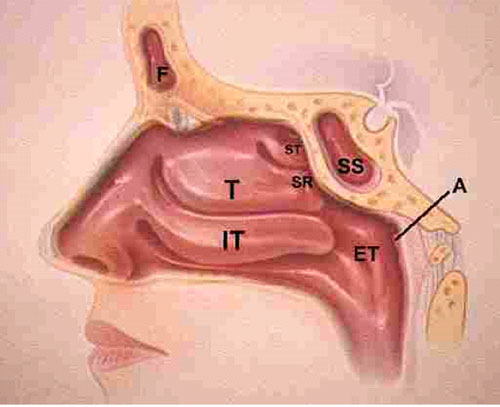
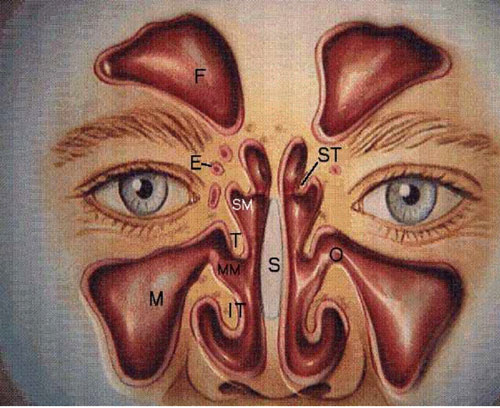
The nasal sinuses can be thought of as extensions of the nasal cavity. The sinuses are basically holes or cavities in the skull located around the nasal cavity. While the exact function of the nasal sinuses is not known (some suggest they are in place to reduce the weight of the skull), we do know that they produce significant amounts of mucous that is drained into the nasal cavity. The sinus ostea are the openings that connect the sinus to the nasal cavity. During a sinus infection, the infected mucous will change in color and fill the sinus to cause symptoms of pain and pressure. Often, when suffering from a sinus infection, you will notice green or yellow mucous when blowing your nose. That mucous comes from the sinuses as they try to drain themselves of the infected material.
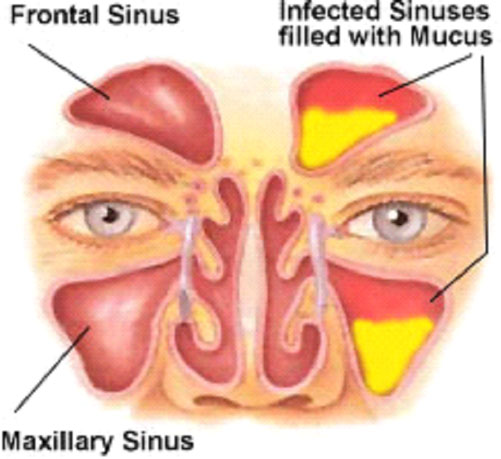 Pathophysiology: So what is it that causes the chronic facial pain, pressure, headache, nasal congestion and nasal discharge that affects so many people who suffer from sinusitis? The simple answer is swelling. If you look at the above diagrams, you’ll notice that the sinuses are rather large, but the sinus ostea and outflow tracts (the openings of the sinus through which mucous must pass to get to the nasal cavity) are quite small. Swelling of the lining around that tract will close the outflow tract and prevent the sinus from emptying itself of its mucous. That mucous will fill the sinus and become a site for bacteria to grow, eventually leading to a full sinus infection. Once the sinus is infected, the immune system will try to kill the infecting bacteria. Unfortunately, the immune response may lead to more swelling, resulting in more backup of mucous and in recycling of the infection. That’s how the cycle of swelling and infection keeps going.
Treatment: Successful treatment of chronic sinusitis involves breaking the cycle of swelling and infection. To do that, you have to treat whatever factor caused the initial swelling to begin with, and also treat the active infection that helps keep the cycle going. Since the two main causes of initial sinus swelling and blockage are allergies and bacterial infections, antibiotics and anti-inflammatory pills and sprays are often the first line of treatment for sinusitis. In addition, irrigating the nose with saline solution can help reduce mucous buildup and also reduce the concentration of particles that you are allergic to. Remember, the goal is to reduce swelling and inflammation to the point that the natural sinus openings can begin to drain the sinus again.
Unfortunately, there are cases where even the most aggressive medical management is not successful in breaking the cycle on infection and swelling that leads to chronic sinusitis. In such cases, sinus surgery is considered. Again, the goal is to open the natural sinus drainage pathway so that the sinus can begin to drain itself and eventually heal. The details of surgically altering the nasal sinuses are discussed in subsections of this site.
|
Dr. K. Amini 8435 Reseda Blvd Northridge, CA 91324 |



@ ENT Doctor LA, Website was created and maintained by Biago Media